

shell
benducket3211@gmail.com
Can a 3D Microscope Revolutionize Scientific Observation? (24 อ่าน)
4 เม.ย 2569 14:56
In modern laboratories and research facilities, precision and clarity are critical for accurate analysis. The traditional optical microscope, while still widely used, often falls short in providing the depth and spatial understanding required for advanced scientific work. Enter the 3D microscope, a sophisticated tool that brings three-dimensional visualization to the forefront of scientific exploration. Unlike conventional microscopes, a 3D microscope allows researchers to examine samples from multiple angles, creating a more comprehensive understanding of structure, texture, and spatial relationships. This technological advancement is transforming the way scientists, engineers, and professionals across fields study materials, biological specimens, and electronic components.
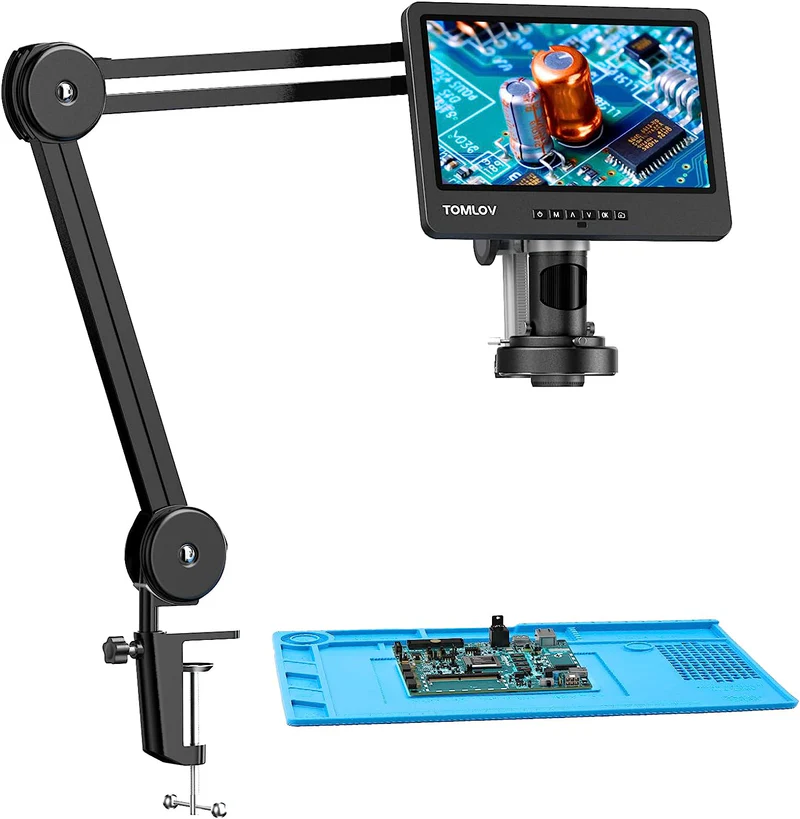
Can a 3D Microscope Improve Research Accuracy?
A 3D microscope offers more than enhanced magnification; it provides a multi-dimensional perspective that is crucial for detailed analysis. In biological research, for instance, observing tissue samples, cells, or microorganisms in three dimensions helps scientists understand complex structures that are not easily interpreted in two-dimensional views. The ability to rotate, tilt, and zoom in on specimens ensures that researchers can detect subtle features, anomalies, or patterns that may impact experimental results.
In materials science and engineering, 3D microscopes enable precise measurement of surface topography, defects, and microstructures. Industries such as electronics rely on these microscopes to inspect circuit boards, semiconductors, and components with microscopic accuracy. By providing depth perception and real-time visualization, the 3D microscope reduces errors and enhances decision-making, making it an invaluable tool for both research and quality control.
Can a 3D Microscope Enhance Digital Documentation?
Modern 3D microscopes often come equipped with digital imaging capabilities, allowing users to capture high-resolution images and videos of specimens. These digital tools are essential for documentation, sharing findings with colleagues, and creating records for long-term study. Researchers can manipulate digital models of specimens, measuring dimensions, angles, and surface features with extreme precision.
Digital integration also supports software analysis for tasks like morphometry, volumetric measurements, and comparative studies. For medical research, pathology, or forensic applications, having an accurate digital 3D model ensures that findings can be reviewed, validated, and presented in scientific publications with credibility. The combination of high-resolution imaging and 3D visualization elevates research efficiency, reduces the risk of misinterpretation, and enables collaboration across institutions and disciplines.
Can a 3D Microscope Support Advanced Education and Training?
Beyond professional research, 3D microscopes play a significant role in education and skill development. In classrooms and training laboratories, students can explore microscopic worlds with depth perception, gaining a better understanding of biological, chemical, and material sciences. Unlike traditional microscopes, which often provide flat, limited views, 3D microscopes allow learners to observe structures interactively, rotate samples, and engage in practical experimentation that reinforces theoretical knowledge.
Medical and technical training also benefits from 3D visualization. For instance, anatomy students can examine tissue layers or cellular arrangements in three dimensions, while electronics trainees can study component assemblies with a comprehensive view of spatial relationships. By fostering hands-on interaction with microscopic structures, 3D microscopes enhance learning outcomes, critical thinking, and problem-solving abilities among students and trainees.
Can a 3D Microscope Provide Long-Term Value for Professionals?
Investing in a 3D microscope is more than acquiring a sophisticated piece of equipment; it is an investment in precision, accuracy, and productivity. For professionals in research, manufacturing, medical, or forensic fields, the ability to analyze samples in three dimensions leads to better insights, improved quality control, and reliable results. By minimizing observational errors and enabling digital documentation, these microscopes ensure that work is both accurate and verifiable.
Additionally, as technology advances, 3D microscopes are becoming more accessible, offering features such as high-speed scanning, automated measurements, and cloud-based storage for collaborative research. This long-term utility makes them a cost-effective solution for institutions and professionals who require cutting-edge tools for detailed examination and documentation.
Conclusion
A 3D microscope represents a significant leap forward in scientific observation, research, and education. By providing three-dimensional visualization, digital integration, and precise measurement capabilities, it enhances accuracy, documentation, and learning experiences across multiple fields. From biological research to materials engineering and educational training, the advantages of a 3D microscope are clear. Investing in this advanced technology ensures professionals and students alike can explore, analyze, and understand microscopic worlds with unprecedented clarity and depth, ultimately driving innovation and discovery.
43.242.177.63
shell
ผู้เยี่ยมชม
benducket3211@gmail.com